
-Brian Gilbert 5/24/24
When I first started training for ultras there was a thousand little things to learn. I had no idea what a tempo run was or what my heart rate zones were, and I had no idea how to build an effective training plan. I chose to hire a coach to help teach me those things, and it was a great decision. Will Frantz was able to quickly get me on a plan and begin the long process of answering all of the dumb questions I could come up with. Long runs started getting longer and fitness started to improve, but one thing always bothered me. Early on I asked Will how long my final ‘long run’ would be, and was shocked to hear that they would top out around the four hour mark for my 50k. I did a few specific longer runs for my first 100 miler, but by and large my early races were the proving grounds.
Well this raises an obvious question. How do I know that I CAN run for 12-24 hours, or even longer, if I never do it before race day? I don’t remember exactly how he said it, but the answer went something like this. “Trust your training, your fitness will be there. The challenge to running long distances is mostly mental by the time race day rolls around.” While unsatisfying, it made sense, and I set out to be ready. I’ve done hard things before, although nothing at that level, and when your sergeant tells you that you have a 20k ruck march tomorrow, quitting is not an option. The big mental challenge in a 24 hour run is that the only person making you do it is yourself, and DNF’ing is always an option. This requires a totally different mindset, and I needed to come up with some different techniques.
I ran my first marathon after a 20 mile training run that I spent many weeks working up to. My first 50k followed a few months later. Time wise I was going to spend a pretty similar amount of time running, as I had gotten somewhat faster, so I never felt there was a huge jump. When I signed up for a 52 mile trail race next, I was looking at going from a 6 hour finish to a 12 hour finish target. That felt substantial. I was pretty dead after my 6:15 finish at the Zion 50k, and had no idea how I was going double the time on my feet and remain alive. Since staying alive was one of the non-negotiable conditions that my wife has placed on this endeavor, I needed to convince myself this was possible, and fast.
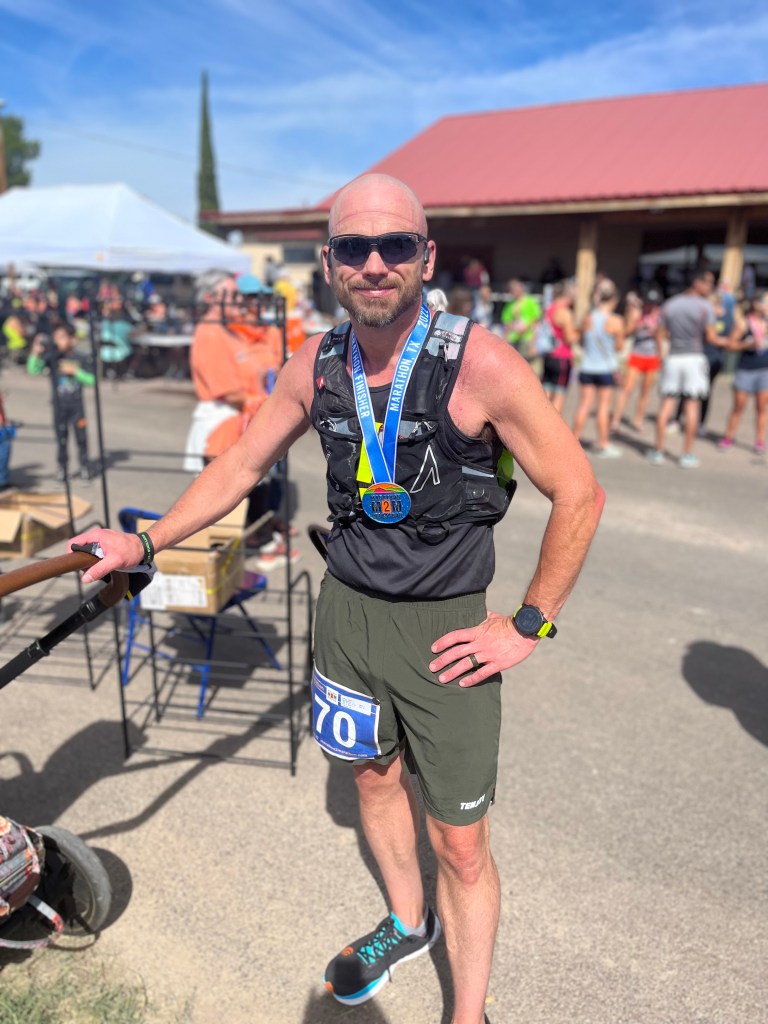
The first thing I wanted to do was have a solid understanding of what I was getting into. I’m a reader, and people love writing race reports. I probably read couple dozen detailed accounts of races from 50 milers all the way to multi-day races that covered hundreds of miles. I wanted to understand the challenges related to logistics, but more importantly see how people talked about the mental battle of an extended race. Obviously everyone is different, but there was a lot of common ground. This is the list that I wrote down in my notes, not complete by any means, but things that most seemed to experience.
- You will most likely have some kind of pain, often not linked to a particular injury, that doesn’t prevent you from finishing, but will make you think that finishing is impossible.
- You might be sick, throw up, or have diarrhea. Most of the time you can recover, but it will suck.
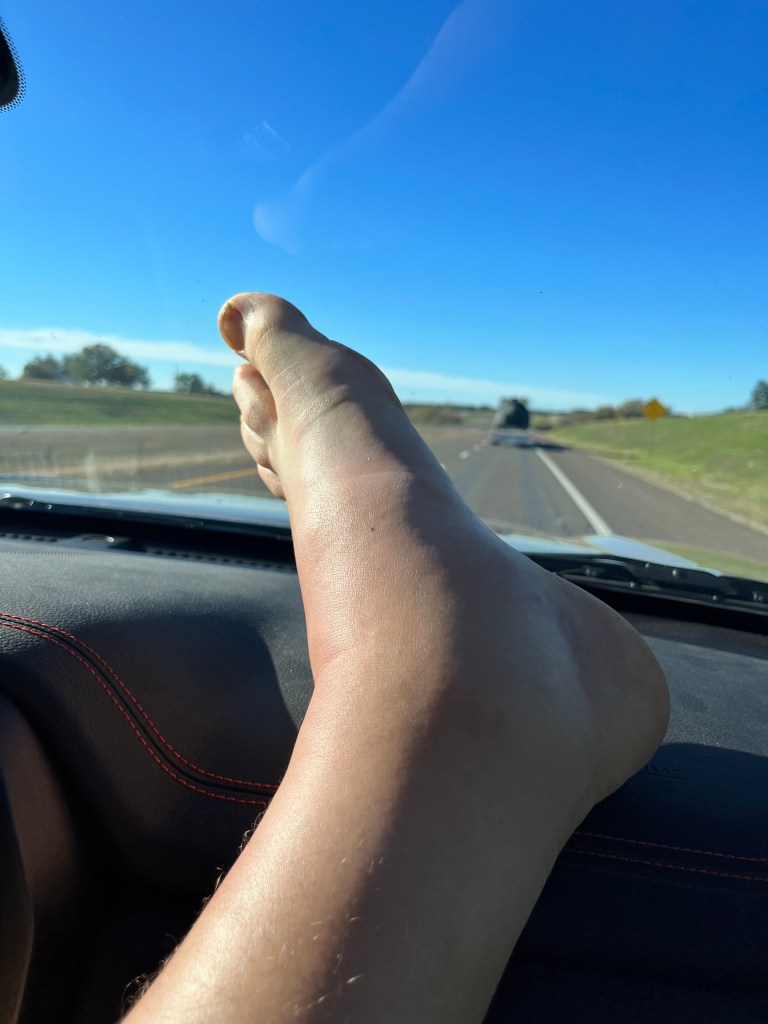
- Minor injuries are common, as well as blisters and foot problems. These can take you out of the race, but are also frequently overcome.
- You absolutely will experience extreme fatigue, the desire to quit, and entire segments that just feel terrible for unknown reasons. This one is the killer for a lot of people.
None of these things look very fun, but if you combine everything over a 24+ hour event, it is easy to see why even experienced and well trained ultra runners still DNF races on occasion. For the newbie It can be a little overwhelming. One thing that I learned during my many months in the hospital is that anticipated, or imagined, pain is often worse than the real thing. Our brains can turn expected hardships into unassailable monsters if we don’t keep it under control. Working your mind through a difficult situation in advance can be a powerful tool for success, if done correctly. The trick is to anticipate the pain, but also getting past it. Remember that the pain has a purpose, and your victory over it is just as important as the number of miles your Garmin records.
When I think about mental preparation today I split it into two camps. Problems and suffering. Problems are well defined, and include stomach issues, equipment issues, blisters and foot problems, etc. What they have in common is a specific plan and steps to deal with them. These are things that I know how to make better, at least in theory. Suffering just is. During an ultra that’s the voice that screams ‘you can’t do this’, are too tired, or that your problems are totally out of control. It’s the voice that tells you that minor pain is now excruciating, even though it really hasn’t changed. Suffering takes out a ton of people, but dealing with the first part will help you with the second.
As race day approaches I spend an increasing amount of time mentally living in the race. I don’t waste time imagining things will go to plan because they won’t. The one constant in my races is that there will always be some kind of problem. The weather will suck, or you might go into the race with a minor injury, you could have equipment failures, stomach issues, etc. The course may be more difficult than expected, or just in bad condition for that particular day. I try to work through a myriad of potential problems in my head, with a specific focus on how these problems will make me feel. Am I likely to be in pain, sick, or more probably just very frustrated and broken down? Most issues are very easy to work through logically before the race. I know what to do when I get sick, I have spare equipment if something breaks, and have plans and backup plans for nutrition, hydration and salt intake. I prepare for the issues and more importantly, define exactly when to call a minor issue an official problem. Nausea is expected at some point, and fine. If I throw up, or can’t eat or drink for more than 30 minutes, then we have a problem and it’s time to go to plan B. Making that decision in advance removes a huge amount of mental stress. That’s bandwidth that I can apply to getting through the low points and suffering. Obviously proper planning is essential to this technique. I have seen a ton of ultra runners who show up to 100 mile races with no spare gear and very minimal planning. If we are spending hundreds of hours training, it makes sense to devote a few to planning. I plan to write on this in the future.
The other side is suffering. I unfortunately have a lot of experience with this. Years ago I was badly injured in a parachute jump. Multiple surgeries and many months in the hospital followed. Ever since I have lived with significant chronic pain. This has definitely improved with my running, but is still very much a part of my life. I have learned to give purpose to pain, and appreciate both what it is telling me and the fact that I can overcome it. Extreme fatigue is very similar. It sucks, but has purpose and can be overcome. The hardest part for me is deciding when pain represents an actual injury that needs to be addressed immediately vs something that that is uncomfortable, but no real danger. Most runners I know have continued to train with pain until something breaks. Sometimes during a race you make the judgment call to continue running on an injury. I sprained my ankle at mile 75 of my first 100 miler. I knew that if I continued I would be risking further injury and would likely make my recovery long and painful. On that day I was willing to risk it. It was my first 100, and I was determined to finish at (nearly) any cost. If the same injury had happened on a long training run I would have called it immediately. Think about this kind of thing in advance. How much risk are you willing to take on to finish? Just like dealing with the problems we discussed, planning can remove a ton of stress on race day. Have clear lines laid out that if crossed, will result in a DNF. Accept it, but fight like hell to never get there. Remember this is not about the suffering during the race, but more of how it will affect you afterwards.
During the race, suffering is just part of what we do. Will one told me, “All you need to finish an ultra is a decent level of fitness, and a capacity for suffering.” I immediately stated thing of all the things he was leaving out, as I wrote the quote down. Later I came to feel there was something profound in that simple statement. If you have no capacity for suffering, you are not running ultras. Period. It doesn’t matter how fit or experienced you are. Courtney Dauwalter has talked many times about the ‘pain cave’, as have other professional runners. If we can’t avoid it, then we must learn to increase our capacity. Professionals have this, and it’s a skill that can be learned.
Minimizing or limiting suffering is a worthwhile pursuit, but this is action as opposed to thought. That’s where your excellent planning can relieve stress and increase our ability to cope on race day. Less things to worry about, and the confidence that you have backup plans in place increases your capacity for suffering. Knowing where you have struggled in the past can shed a ton of light on the future as well. I struggle in hot temperatures. If a race is going to be warm, I plan to minimize that suffering by having a solid salt and hydration plan along with ice and cool drinks where possible. I also mentally prepare for it. I know it’s going to be hot, I know I will struggle and it will suck. I live in those moments before the race. I feel the sweat and sun in my mind. I know it’s hard, and I know I can prevail.
Suffering has a purpose. It’s part bio-feedback and part mental. We always imagine things to be worse than they are. I once watched a drill sergeant yell at a young soldier during a run for 30 minutes straight. The guy was absolutely suffering, he was in abysmal shape and it was hot as hell in the Oklahoma sun. The drill sergeant was telling him not to quit, not to give in. Well he didn’t, and about five miles in he just lost consciousness and hit the ground like a sack of rocks. The drill sergeant told him he had just received a special gift. He now knew his physical limit, and his mind was stronger than his body. While I obviously don’t recommend this technique, it does showcase that when the body is done it will quit. Whether you want it to or not. This scenario does not always hold for ultra runners. We have tons of experience pushing ourselves, and it’s totally possible to run yourself into a serious injury. However, most of the time we drop because our mind quits, way before our bodies would have.
During the race I spend zero bandwidth wishing conditions were better, that I was in better shape, or that I should have signed up for the 50 miler instead of the 100. On race day I walk up to the starting line confident in my planning, both physical and mental. My fitness is what it is, and I have zero say in the weather. Im apprehensive, but only about the things that I can directly control on race day. Im here for a war. A war between myself and the course. Suffering is the work that that I must put in to be victorious. It’s what I’m here to do. I’ve lived this day in my minds eye a hundred times, with a hundred different problems. I’m ready for them all. The purpose of my suffering becomes clear. It’s what is required to win the war. It’s the biofeedback that tells me I’m working as hard as I am able. It’s the currency of the mental war in my head at mile 80.
I never imagine the finish line. In all my mental prep, I never see myself crossing it. I know this goes against common wisdom. In my mind I haven’t done the work, haven’t overcome the suffering. The finish line is my reward, and I’ll savor it when I cross it. The Rocky Raccoon 100 in 2024 was insane. The park had gotten 14 inches of rain in the previous week and it rained on race day as well. The course was a disaster of mud and raging river crossings. Late at night I caught myself checking my watch repeatedly. Trying to watch mile 80 turn into 81. This is something I do when the suffering is getting to me. I know it, and was even able to recognize it during the race. Right then I switched my Garmin to display average pace and nothing else. I told myself that the race would NEVER end and this was my life now. Just run. Keep moving at all costs. Try to go beyond the suffering and just become the suffering. It worked, and in a weird way was comforting. My life became very simple in that moment. One foot in front of the other. Repeat. Sure there was suffering, but I OWNED it. I was kicking its ass, and this thing could go on forever for all I cared. I crossed the finish line at 23:35 and secured my first sub-24 hour 100miler finish early the next morning. Ahead of plan and without significant injury.

Go read DNF reports. Lots of them. Way before runners get to the ‘reason’ that they had to drop, their account will be filled with tales of suffering. You can never really know what someone else is going through in their mind. However, I can’t help but wonder if they had done some better mental preparation and planning, maybe things could have ended differently. We spend so many hours out on the trail getting ready for these races, remember that there is more to running ultras than running. You need a capacity for suffering.
 Trail 2 Ultra